Tracing Algorithmic Adjustments in Progressive Jackpot Pools Linked to Poker Variant Popularity Spikes
Finley Becker · Aug 3, 2026
Tracing Algorithmic Adjustments in Progressive Jackpot Pools Linked to Poker Variant Popularity Spikes
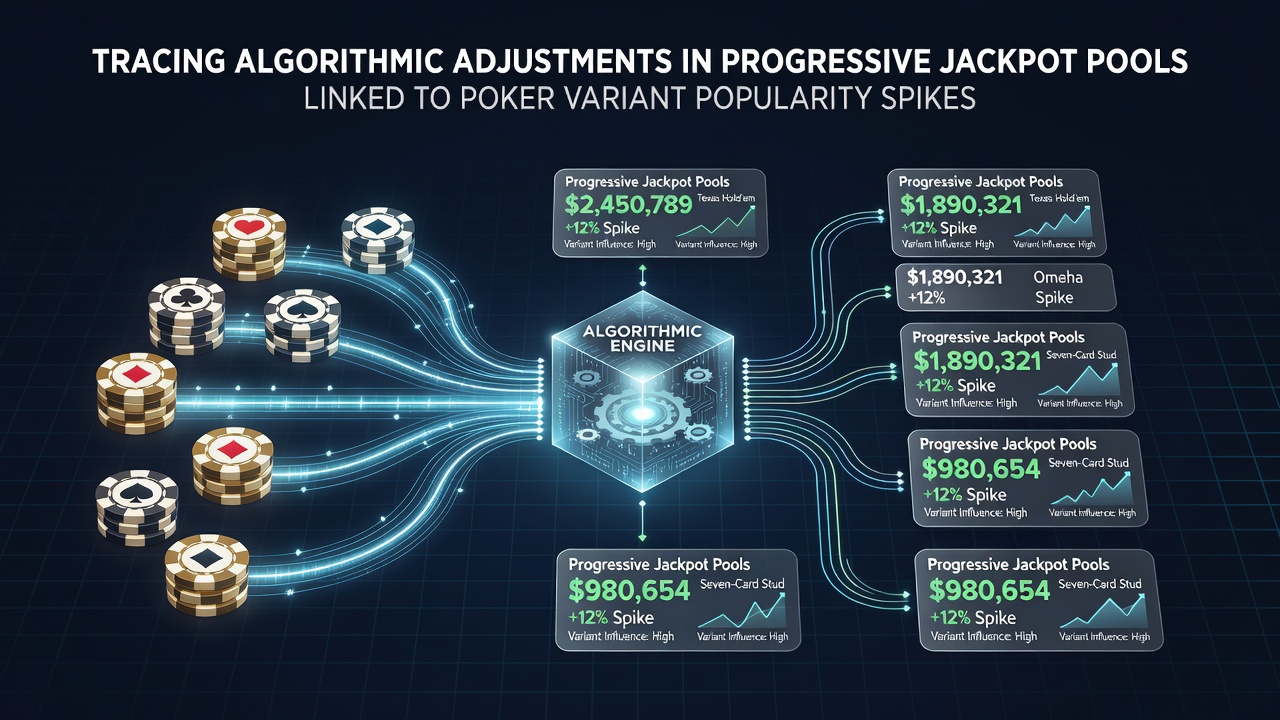
Online poker platforms track player volume across variants through data systems that feed directly into progressive jackpot mechanisms, and these systems trigger adjustments when engagement metrics rise sharply for a particular game. Researchers examining platform logs note that popularity spikes in variants like Pot-Limit Omaha or Short Deck Hold'em prompt algorithms to recalibrate contribution rates from each pot, shifting percentages to maintain pool growth without disrupting payout schedules. Data from major operators shows these recalibrations occur within minutes of sustained volume increases, linking traffic patterns to pool parameters through predefined thresholds.
Data Inputs Driving the Adjustments
Platform operators collect metrics on hand frequency, active tables, and average buy-ins per variant, then route this information into centralized monitoring software that compares current figures against historical baselines. When a variant exceeds its expected participation range, teh system initiates an evaluation cycle that examines jackpot accrual velocity and remaining time to next payout tier. Observers note that August 2026 records from several networks indicated accelerated adjustments during a documented surge in mixed-game formats, where Omaha Hi-Lo variants drew unexpected interest from multi-table participants. These inputs allow the algorithms to scale seed contributions or modify rake allocations dynamically while preserving regulatory compliance across jurisdictions.
Algorithmic Response Mechanisms
Once thresholds activate, the adjustment protocols alter the rate at which each hand contributes to the progressive pool, often increasing the percentage from 1 percent to 1.5 percent or higher depending on the scale of the spike. Engineers who maintain these systems describe layered decision trees that first isolate the variant in question, then cross-reference concurrent activity in related games to avoid cascading effects on overall liquidity. The process incorporates safeguards that cap daily pool growth to prevent disproportionate accumulation, and logs from multiple sites confirm that such caps activated during the August 2026 period when certain draw-heavy variants experienced multi-day surges. This measured response keeps jackpot values competitive yet sustainable across the network.
Variant-Specific Patterns Observed
Popularity spikes rarely affect all poker formats equally, so algorithms apply variant-specific weighting when recalibrating pools. Texas Hold'em variants typically trigger slower adjustments because of their established volume baseline, whereas newer hybrids such as Big O or Badugi see faster parameter shifts once player counts cross internal benchmarks. Figures from industry tracking services reveal that platforms operating across time zones register these changes first in Asian markets during evening hours before the same patterns propagate to European and North American servers. The interconnected nature of these adjustments means a spike in one region can influence global pool calculations within the same operational day.

Regulatory Oversight and Reporting Requirements
Gaming authorities require operators to document every algorithmic change that affects jackpot pools, and these records must include timestamps, input metrics, and resulting parameter shifts. The Nevada Gaming Control Board publishes periodic summaries that aggregate such modifications across licensed platforms, providing external visibility into how popularity-driven adjustments align with responsible gaming standards. Similar reporting obligations exist under frameworks administered by the Alcohol and Gaming Commission of Ontario, which reviews pool integrity following any significant recalibration. These oversight mechanisms ensure transparency while allowing operators to respond to real-time traffic fluctuations.
Impact on Player Behavior and Pool Dynamics
Players often migrate toward variants with visibly growing jackpots, creating feedback loops that the algorithms must account for during adjustment cycles. Tracking data indicates that when a pool increases its contribution rate, table occupancy in that variant rises within hours, prompting further monitoring to determine whether the spike represents a temporary trend or sustained interest. Research published in the Journal of Gambling Studies examines these loops through anonymized datasets and finds that algorithmic responses help stabilize pool growth rates even as player preferences shift rapidly. Networks that integrate cross-variant correlation analysis report fewer instances of unbalanced pools compared with those using isolated monitoring.
Conclusion
Tracing these algorithmic adjustments reveals a tightly coupled relationship between poker variant popularity and progressive jackpot mechanics, where data inputs trigger precise parameter changes to sustain pool viability. Regulatory documentation and platform metrics together illustrate how systems adapt to volume fluctuations while maintaining operational controls. Continued examination of these processes provides clarity on the technical infrastructure supporting modern poker ecosystems.