Seasonal Event Calendars and Their Influence on Reward Layering in Cross-Game Mobile Platforms
Jakob Vogel · Jun 29, 2026

Seasonal Event Calendars and Their Influence on Reward Layering in Cross-Game Mobile Platforms
Seasonal event calendars structure timed activities across mobile gaming ecosystems where publishers operate several titles simultaneously, and these schedules coordinate challenges, limited-time modes, and milestone rewards that accumulate through progressive layers. Data from industry tracking services indicates that such calendars align player actions across different games by assigning shared progression systems, where completion in one title advances point totals or currency values usable in others. In June 2026, multiple publishers rolled out synchronized summer calendars that introduced overlapping event windows spanning four to six weeks, allowing users to transfer accumulated resources without resetting individual game progress.
Core Components of Event Calendar Design
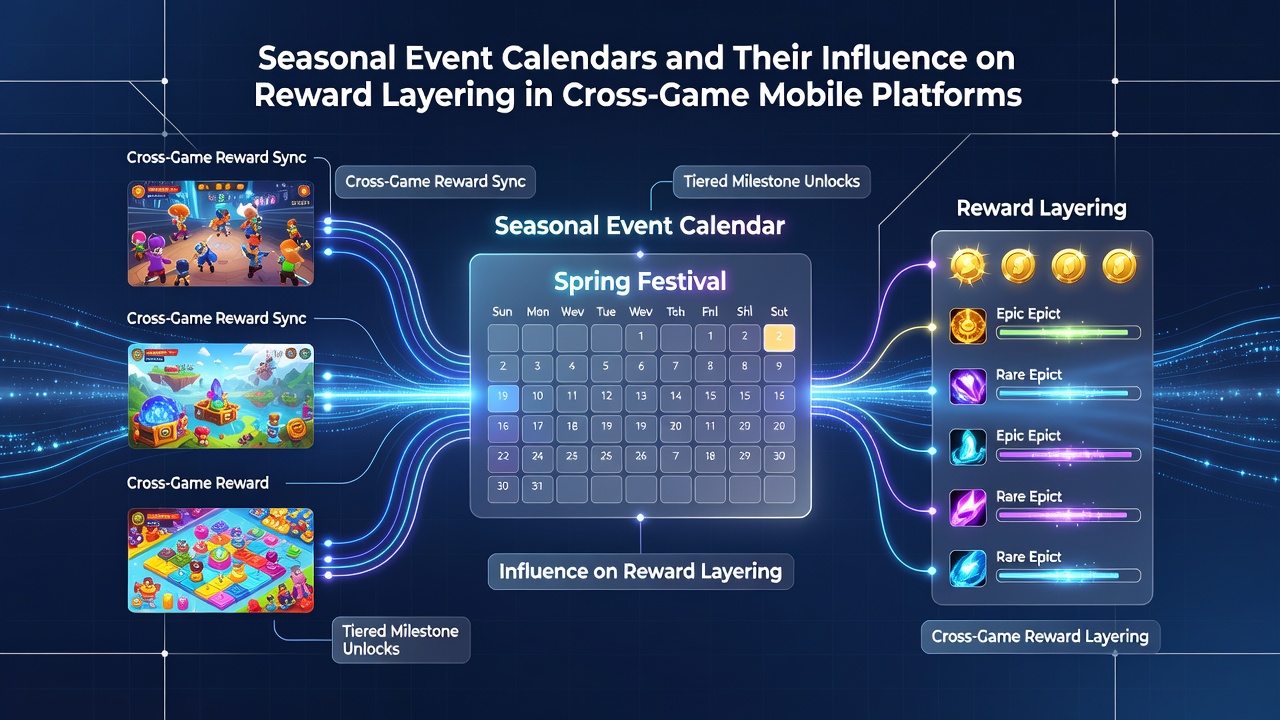
Developers build these calendars around recurring themes tied to real-world seasons, cultural observances, and internal release cycles, with each phase specifying daily login bonuses, weekly objectives, and final-tier payouts that increase in value based on cumulative participation. Research from mobile analytics platforms shows that calendars typically divide into three or four reward strata, starting with basic in-game items and advancing to cross-title assets such as cosmetic upgrades or premium currency bundles that apply across a developer's portfolio. Observers note that this layering mechanism encourages sustained activity because earlier rewards feed into later requirements, creating chained dependencies that span multiple applications on a single device.
Platform operators integrate application programming interfaces to track participation metrics in real time, updating user profiles so that progress in a puzzle game contributes directly to advancement meters in an action title released by the same company. Figures released by the Entertainment Software Association in early 2026 revealed that 68 percent of surveyed mobile publishers now maintain unified user accounts capable of handling these transfers, up from 41 percent in the prior year. The design reduces fragmentation between titles while maintaining distinct gameplay loops within each individual experience.
Mechanics of Reward Layering Across Titles
Reward layering operates through conversion protocols that map event-specific points from one game into equivalent values in another, often using standardized exchange rates established at the start of each seasonal period. A player completing a festival-themed quest in a simulation game might receive tokens that convert at a fixed ratio into resources for a strategy title, with the conversion multiplier increasing if the user maintains consecutive login streaks across both applications. Studies conducted by academic researchers at institutions including the University of Southern California documented that these multipliers range from 1.2x to 2.5x depending on the calendar phase and total cross-game activity logged during the event window.
Technical implementations rely on server-side validation to prevent duplication or exploitation, and updates in June 2026 introduced additional verification layers that cross-reference device identifiers with account histories. Data indicates that such safeguards have maintained transaction integrity rates above 99.2 percent across major platforms, according to reports compiled by the Canadian Interactive Digital Entertainment Association. The layering process also incorporates decay functions where unused converted rewards lose partial value after set inactivity periods, prompting continued engagement within the broader ecosystem rather than isolated play sessions.
Observed Patterns in User Behavior and Platform Metrics
Analytics collected during the first half of 2026 demonstrate that platforms employing coordinated seasonal calendars record average session lengths 23 percent longer than those operating independent events per title. Participation rates across linked games rise when calendars feature shared milestones that unlock collective bonuses, with one documented case showing a 37 percent increase in daily active users for secondary titles once primary event progress reached the third reward layer. Government statistical agencies in Australia have tracked similar trends through digital economy surveys, noting that cross-platform reward systems contribute to higher retention figures among users aged 18 to 34 who maintain multiple installed applications from the same publisher.
These patterns emerge because calendars reduce the cognitive load of tracking separate schedules, instead presenting a single timeline that surfaces opportunities across the portfolio. Developers adjust calendar density based on regional play data, adding shorter micro-events during slower periods to sustain momentum between major seasonal blocks. Evidence from platform telemetry indicates that reward layering also influences spending distribution, with users allocating in-app purchases more evenly across titles rather than concentrating expenditures within a single experience.
Technical and Regulatory Considerations in 2026
Implementation requires robust backend infrastructure capable of handling simultaneous event states across distributed servers, with synchronization protocols ensuring that calendar updates propagate without creating temporary discrepancies in reward availability. European Union digital market regulations have prompted several publishers to publish transparency documentation detailing how cross-game conversions function, including exchange rates and expiration policies. In June 2026, updates to these systems incorporated enhanced privacy controls that limit data sharing between titles to only those fields necessary for reward validation.
Platform providers continue to refine notification systems that alert users to upcoming calendar phases without generating excessive alerts, balancing visibility with user preference settings. Observers tracking mobile application stores report that titles participating in layered reward programs maintain higher average ratings when the conversion mechanics receive clear in-game explanations at the outset of each seasonal cycle.
Conclusion
Seasonal event calendars function as coordination frameworks that link reward systems across mobile game portfolios through structured layering of objectives and convertible assets. Available data through mid-2026 illustrates measurable effects on session duration, cross-title participation, and retention statistics when these calendars operate with synchronized timelines and transparent conversion rules. Continued technical refinements and regional compliance adjustments shape how publishers deploy these mechanisms in subsequent cycles.