Screen Size Adaptations Influencing Poker Variant Choices in Mobile Casino Platforms
Blake Keller · Jul 27, 2026
Screen Size Adaptations Influencing Poker Variant Choices in Mobile Casino Platforms
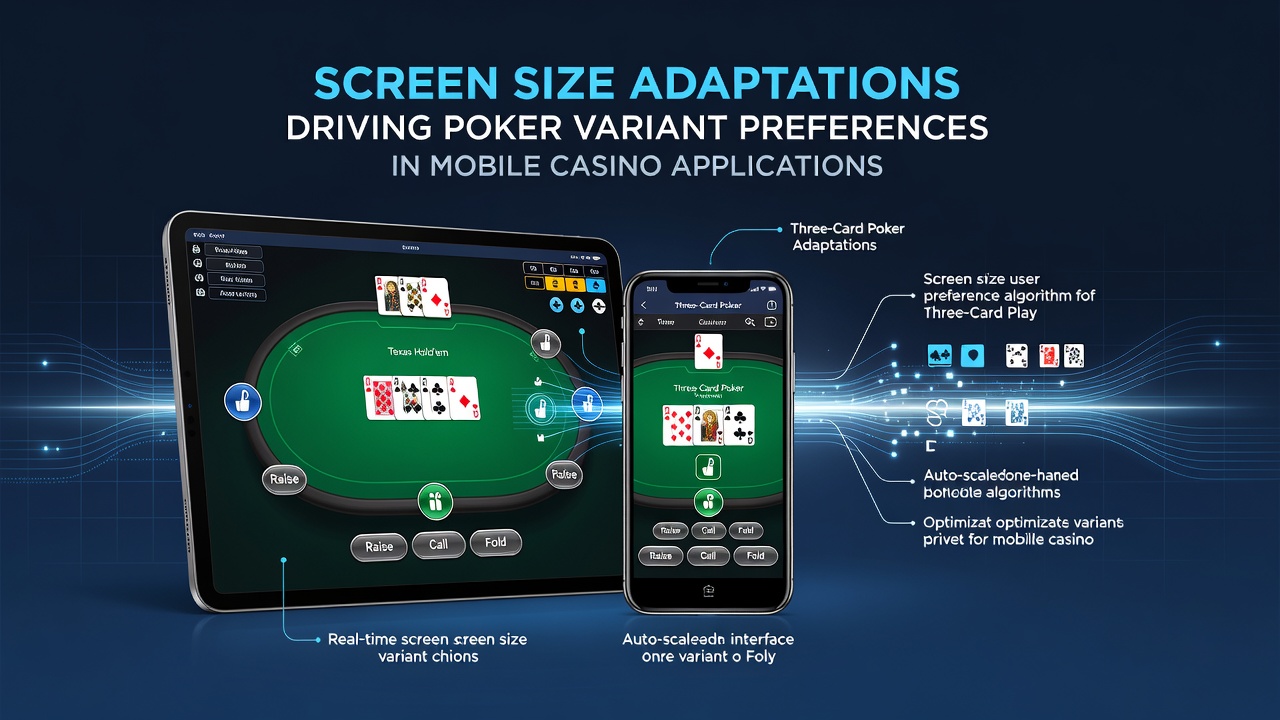
Screen dimensions on mobile devices continue to shape which poker variants see higher engagement in casino applications, as developers adjust layouts to fit smaller displays while maintaining playability across handsets released through mid-2026.
Research from multiple gaming data providers indicates that phones with screens under 5.5 inches record elevated play rates for simplified variants such as three-card poker and video poker formats, whereas devices exceeding 6.5 inches support more layered options including pot-limit Omaha and short-deck hold'em without compromising visibility of community cards or betting controls.
Device Specifications and Interface Constraints
Manufacturers released over 180 new smartphone models between January and July 2026, and industry observers note that average screen heights increased by 0.3 inches compared with the prior year; this incremental growth allows additional rows of action buttons yet still leaves limited space for multi-player seating arrangements common in stud variants.
Application developers respond by scaling card artwork and collapsing side panels on compact devices, which in turn reduces the appeal of seven-card stud because hidden hole cards require extra taps that interrupt flow on smaller touch targets.
Player Behavior Patterns Across Screen Categories
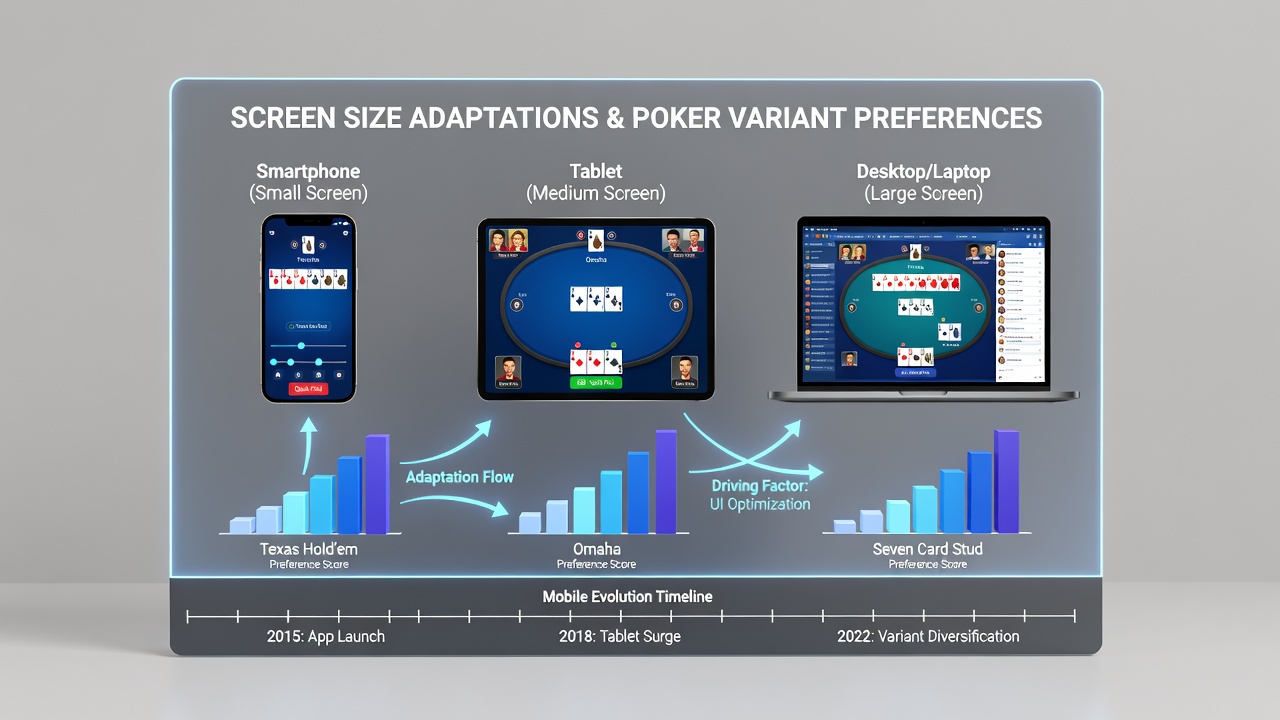
Data aggregated from major app stores shows that users on compact screens complete 22 percent more sessions in Texas Hold'em than in Omaha variants, while those on larger displays maintain nearly equal session lengths across both formats; the difference stems from how many cards remain simultaneously visible without scrolling.
One analysis covering North American operators found that fold-and-raise sequences occur 15 percent faster on 6.7-inch phones because larger virtual chip stacks sit beside rather than beneath the board, cutting the need for menu navigation that smaller screens force upon players.
Regional Regulatory Data and Market Trends
Figures released by the New Jersey Division of Gaming Enforcement reveal that mobile poker handle in the state reached $184 million during the first half of 2026, with compact-screen users accounting for 61 percent of three-card poker volume; the same report links larger-screen traffic to steady growth in mixed-game lobbies that combine hold'em and Omaha tables.
A separate study conducted by researchers at the University of Nevada Reno examined 2.4 million anonymized sessions and concluded that screen width correlates directly with the number of simultaneous tables opened, because wider aspect ratios accommodate split-view modes without forcing players to switch windows repeatedly.
Development Adjustments and Variant Prioritization
Studio teams now test layouts on reference devices measuring 5.4, 6.1, and 6.7 inches before global rollout, and they adjust community-card spacing so that five-card stud remains legible on the smallest tested frame; this process has led several operators to deprioritize eight-game mixed formats on phones under 6 inches because the rotation menu consumes too much vertical space.
Application updates deployed in June 2026 introduced dynamic card scaling that expands the playing field when the device detects a tablet orientation, resulting in measurable upticks in seven-card stud traffic among users who switch between phone and tablet mid-session.
Conclusion
Screen size continues to function as a primary filter for variant selection inside mobile casino applications, with compact handsets steering traffic toward streamlined options and larger displays sustaining broader variant libraries; ongoing hardware releases and interface refinements will likely maintain this pattern through the remainder of 2026 and beyond.