How Time Zone Differences Affect Participation Rates in Global Live Poker Tournaments Hosted Online
Blake Keller · Aug 12, 2026
How Time Zone Differences Affect Participation Rates in Global Live Poker Tournaments Hosted Online
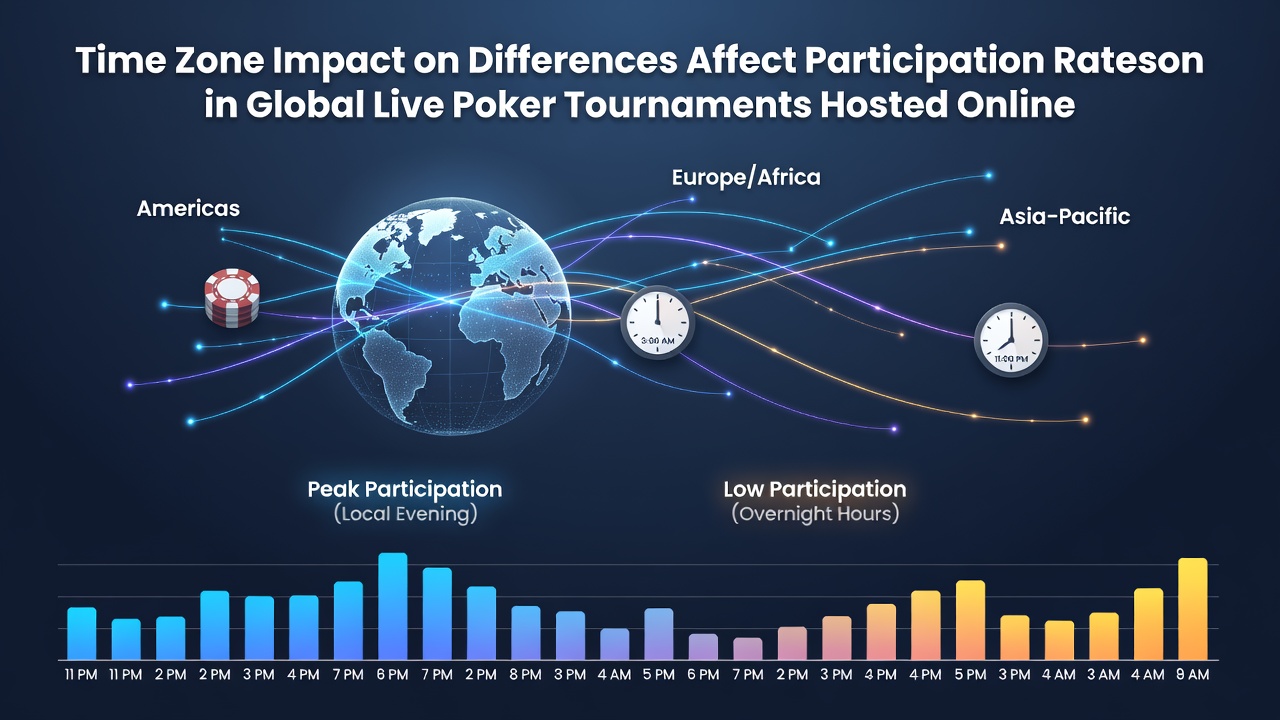
Global live poker tournaments hosted online rely on standardized scheduling that typically anchors to Coordinated Universal Time, yet player availability shifts dramatically across continents because local clocks create overlapping windows of peak alertness and rest, and data from major platforms indicate measurable drops in entries when events fall outside evening hours for key regions.
Tournament Scheduling Anchored to UTC Standards
Organizers set start times in UTC to accommodate worldwide audiences, which means a 20:00 UTC event lands at 4:00 PM Eastern Daylight Time for North American players while simultaneously hitting midnight for participants across parts of Asia, and this fixed reference point forces each region to adapt its daily routines around those markers. Observers note that late-night starts in one locale often coincide with early morning elsewhere, reducing the pool of rested competitors who can sustain focus through multi-hour sessions. Research indicates that platforms tracking entry logs record the highest volumes when events begin between 18:00 and 22:00 local time for the largest player bases in Europe and North America, whereas equivalent UTC slots produce thinner fields from East Asian time zones.
Regional Participation Patterns Across Continents
European players frequently encounter favorable alignment because many flagship events open during their evening hours, allowing higher sustained engagement from the United Kingdom through Central Europe and into Eastern zones, while Australian participants face consistent disadvantages when the same tournaments begin during local afternoon or early morning periods. Data compiled by operators show that Australian and New Zealand entries decline by measurable percentages during UTC-heavy daytime blocks, and similar patterns appear among South American players when events miss their post-work window. Canadian Gaming Association figures reveal that North American participation spikes when start times fall between 19:00 and 23:00 Eastern, yet drops sharply for Pacific-coast users facing earlier local openings that clash with work schedules.

Observed Effects During Peak Global Events in August 2026
Throughout August 2026, several major series maintained consistent UTC anchors that highlighted these disparities, with entry dashboards reflecting stronger representation from Atlantic-facing regions during evening UTC windows and reduced turnout from Pacific Rim countries during their corresponding daytime or overnight slots. One study revealed that simultaneous multi-table formats exacerbate the issue because fatigue accumulates faster for players whose local clocks place the later stages in the middle of the night, prompting some operators to introduce staggered satellite qualifiers timed for different hemispheres. Those who analyzed registration timestamps across platforms noted that hybrid formats combining live dealer feeds with virtual tables still inherit the same time-zone friction, since physical studio hours in Europe or the Americas dictate broadcast availability that remote players must match regardless of their own circadian rhythms.
Platform Adjustments and Player Adaptations
Operators have experimented with rotating start times across weekly schedules to balance access, rotating between early and late UTC slots so that no single region remains permanently disadvantaged, and registration data shows modest gains in cross-zone diversity when such rotations occur. Yet the core constraint remains that live dealer availability and regulatory approval windows often limit full flexibility, particularly for events requiring real-time oversight from licensed studios. Players in distant zones frequently adjust sleep patterns or select shorter formats that conclude before local dawn, while longer championship events continue to draw predominantly from time zones that align with evening UTC blocks. Industry reports compiled by the Canadian Gaming Association document these adaptation strategies through anonymized participation metrics, confirming that time-zone offset remains a persistent variable in entry distribution.
Data Sources and Measurement Approaches
Tracking relies on timestamped registration logs cross-referenced with player-provided location data, allowing analysts to map participation density against UTC offsets without compromising individual privacy, and such methods have produced consistent findings across multiple operators. The Australian Gambling Research Centre has examined similar patterns in digital gaming environments, noting parallel effects on engagement when events misalign with local daylight hours. These measurements help explain why certain regions maintain steady representation while others exhibit seasonal fluctuations tied to daylight saving transitions that further shift the relative UTC gap.
Conclusion
Time zone differences continue to shape entry volumes in global online live poker tournaments through the fixed nature of UTC scheduling and the resulting local-hour mismatches, with participation data consistently demonstrating higher rates from regions whose evening periods align with event starts and lower rates from zones facing daytime or overnight conflicts. Platforms respond through schedule rotations and format adjustments, yet the underlying geographic realities persist across events including those held in August 2026, producing measurable variation in field sizes and regional representation that operators monitor through timestamp analysis and demographic tracking.