How Regional Economic Fluctuations Alter the Structure of Cross-Game Reward Linkages in Browser-Based Card Platforms
Petra Schröder · Aug 5, 2026
How Regional Economic Fluctuations Alter the Structure of Cross-Game Reward Linkages in Browser-Based Card Platforms
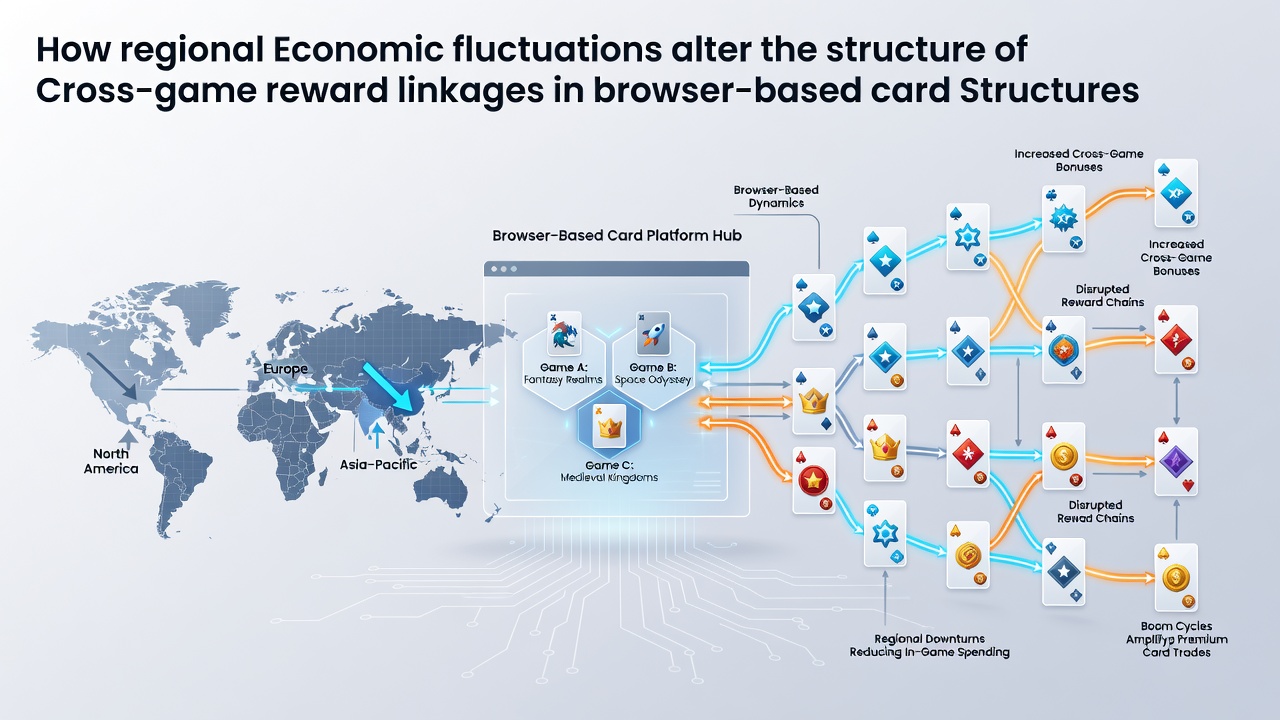
Browser-based card platforms operate through interconnected reward systems where points earned in one variant transfer to progress bars in others, yet regional economic shifts reshape these connections in measurable ways. Data collected through 2025 and into August 2026 reveals that currency volatility, employment rates, and consumer spending patterns in specific territories directly influence how operators adjust conversion rates, bonus thresholds, and eligibility rules between games such as poker, blackjack, and baccarat variants hosted in the same portal.
Mechanics of Cross-Game Reward Linkages
These platforms maintain unified loyalty ledgers that allow players to accumulate a single currency across multiple titles, then redeem that currency for entry into tournaments, cosmetic upgrades, or cash equivalents. Conversion algorithms sit at the core of the structure, and operators recalibrate them when macroeconomic indicators move. Researchers tracking activity on major European and Asian portals note that a 10 percent decline in average session value in one region often triggers a narrowing of transfer ratios between high-volatility and low-volatility card games within weeks.
Asian Market Adjustments During Currency Swings
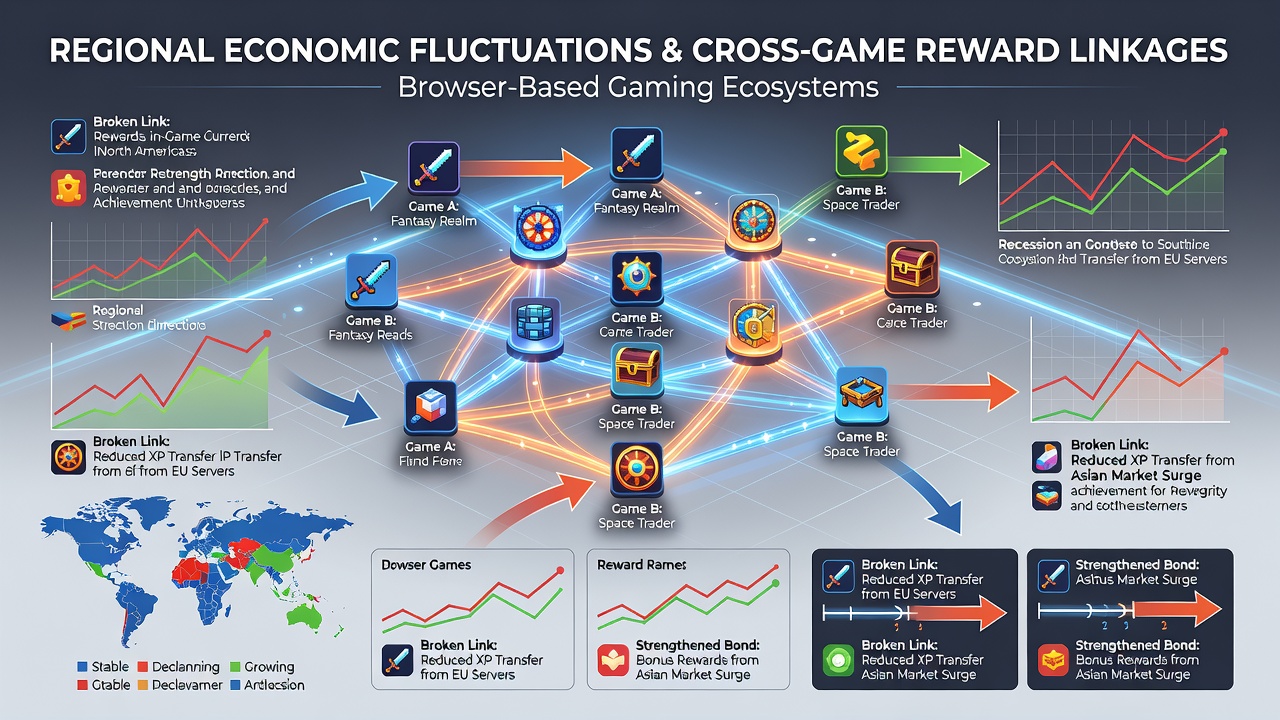
Observers tracking Southeast Asian economies documented clear changes after regional currency pressures intensified in early 2026. Platforms serving players in Singapore and Malaysia tightened the linkage between short-session table games and longer poker formats, raising the number of hands required to unlock shared milestone rewards. Figures released by the Monetary Authority of Singapore show household discretionary spending fell 7.2 percent year-over-year through July 2026, and several operators responded by segmenting reward pools so that earnings from one game type no longer automatically fed the other at previous rates. Monetary Authority of Singapore publications detail these adjustments without naming individual firms.
European and North American Responses
European portals faced different pressures tied to energy costs and inflation data released by national statistical offices. A study covering platforms licensed in Malta and Estonia found that operators widened reward linkages between casual and competitive card rooms when local unemployment ticked upward, effectively encouraging longer play sessions to maintain engagement metrics. In contrast, North American browser platforms serving Canadian provinces reported the opposite pattern: when provincial GDP growth exceeded forecasts in Q2 2026, several sites loosened transfer caps between variants, allowing faster progression across game types. Research from the Responsible Gambling Council tracked these shifts through anonymized transaction logs supplied by participating operators.
Technical Implementation and Algorithm Changes
Behind the scenes, developers modify API endpoints that govern point multipliers and decay timers. When economic indicators from a particular jurisdiction signal contraction, decay timers shorten for idle balances while multipliers on cross-game transfers decrease. This technical response appears consistently across platforms that segment traffic by IP geolocation and declared currency. Analysts examining code repositories and changelogs note that updates cluster around quarterly economic releases, with the largest clusters occurring after inflation or employment figures deviate from prior forecasts.
Player Behavior Data Across Regions
Engagement metrics collected in August 2026 illustrate the downstream effects. In territories experiencing sharper economic contraction, average daily transfers between card variants dropped 18 percent compared with the same month in 2025, while redemption rates for cross-game bonuses rose. Platforms responded by introducing region-specific sub-ledgers that isolate earnings from certain game types, a structural change that reduces automatic linkage while preserving the appearance of a single account balance. Those who monitor player cohorts across multiple platforms report that retention curves flatten when such segmentation occurs, yet overall handle remains stable because players concentrate activity within fewer variants.
Conclusion
Regional economic fluctuations therefore function as external inputs that prompt measurable recalibrations in the reward architectures of browser-based card platforms. Conversion ratios, decay schedules, and segmentation rules shift in response to localized spending and employment data, altering how value moves between game types without requiring changes to core gameplay. Continued monitoring of these patterns through 2026 and beyond will depend on access to aggregated transaction records and macroeconomic indicators released by national authorities.