How Augmented Reality Overlays Reshape Player Interaction Patterns in Mobile Slot Ecosystems Across Regulatory Borders
Jakob Vogel · Jul 8, 2026
How Augmented Reality Overlays Reshape Player Interaction Patterns in Mobile Slot Ecosystems Across Regulatory Borders
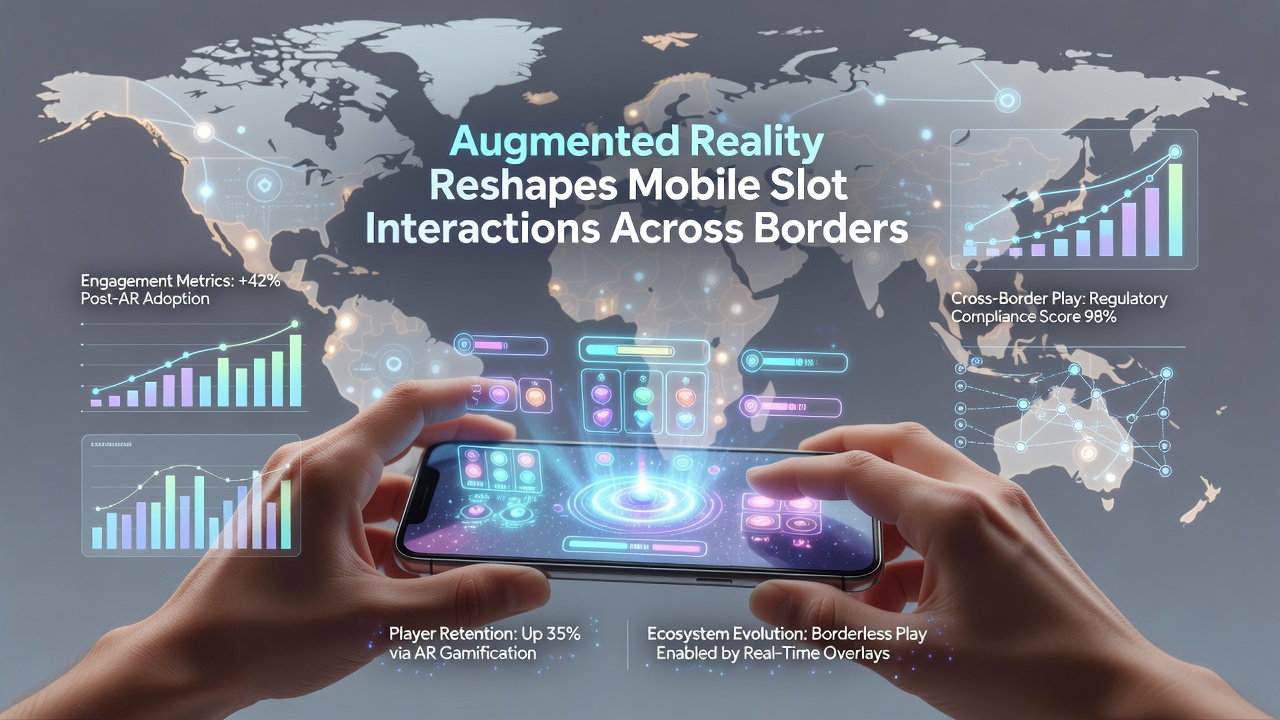
Augmented reality overlays have begun to alter how players engage with mobile slot games by layering digital elements directly onto real-world environments through device cameras, and this shift has produced distinct interaction patterns that vary depending on the regulatory frameworks in different jurisdictions. Mobile slot ecosystems now incorporate AR features that allow users to trigger virtual reels, bonus rounds, and character animations in physical spaces, which changes the traditional tap-and-spin mechanics into more spatially aware actions.
Integration of AR Technology in Mobile Slots
Developers integrate AR overlays by mapping game assets onto a player's surroundings via smartphone sensors, and this creates opportunities for interactions that extend beyond the screen. Players point their devices at tables or floors to reveal hidden symbols, while multi-user sessions enable shared AR experiences where participants see synchronized elements in the same physical location. Data from industry reports indicates that these features have increased session durations in markets where regulations permit such innovations, whereas stricter jurisdictions limit the use of location-based triggers to prevent unauthorized play in public areas.
Shifts in Player Interaction Patterns
Interaction patterns evolve when AR overlays replace static button interfaces with gesture-based controls and environmental scanning, so players perform physical movements like tilting devices or circling objects to influence outcomes. Researchers have observed that engagement metrics shift toward collaborative play in permissive regions, with groups coordinating actions to unlock collective bonuses, while individual play dominates in areas with tighter rules on data sharing. Studies conducted by the International Gaming Institute show that AR elements encourage exploratory behavior, such as scanning multiple surfaces during a single session, which contrasts with the linear progression typical of conventional mobile slots.
Regulatory Variations Across Borders
Regulatory approaches differ significantly across borders, and July 2026 saw several jurisdictions update guidelines on AR functionality in gambling applications. The Alcohol and Gaming Commission of Ontario introduced requirements for geofencing in AR-enabled apps to ensure play remains confined to approved zones, which has prompted developers to adjust overlay triggers accordingly. In contrast, regulators in parts of Asia have focused on content moderation for AR characters, requiring that virtual elements avoid resemblance to real individuals or cultural symbols. These variations influence how interaction patterns develop, because operators in Europe must comply with data protection standards that restrict real-time environmental scanning, whereas markets in Latin America permit broader integration provided age verification occurs at the device level.

Impact on Cross-Border Ecosystems
Cross-border ecosystems face challenges when AR overlays transmit location data across servers located in different regulatory zones, and this creates compliance layers that affect feature availability. Operators segment user experiences based on detected IP addresses and device permissions, which results in some players accessing full AR interactions while others receive simplified versions without spatial mapping. Figures from the Global Betting and Gaming Consultants reveal that revenue from AR-enhanced slots grew steadily in regions with harmonized standards, yet fragmentation persists where one country mandates explicit consent for camera access and another prohibits persistent AR sessions altogether.
Technical Adaptations by Developers
Developers adapt by building modular AR systems that activate or deactivate specific overlays according to local laws, and this modular design allows the same core game to function across multiple markets without full redesigns. Sensor calibration routines adjust automatically when regulations change, such as disabling depth mapping in jurisdictions that classify it as a form of skill-based modification. Observers note that these adaptations maintain consistent core mechanics while altering the visual adn interactive density of overlays, which in turn shapes how players pace their sessions and select games based on available features.
Future Trajectories in Regulated Environments
Future trajectories point toward increased standardization efforts among international bodies, while individual markets continue to refine rules around AR data collection. Mobile slot ecosystems will likely see further integration with wearable devices that extend overlay capabilities beyond phones, provided regulators approve the hardware interfaces. Patterns of interaction will continue to diversify as operators respond to enforcement actions and player feedback collected through compliant channels.
Conclusion
Augmented reality overlays continue to reshape mobile slot interaction patterns by introducing spatial and collaborative dimensions that respond directly to the regulatory environments in which they operate. The differences across borders produce segmented experiences that reflect both technological capabilities and legal constraints, and ongoing updates like those recorded in July 2026 demonstrate how these dynamics remain in flux. Data from sources such as the Alcohol and Gaming Commission of Ontario and reports issued by the International Gaming Institute at the University of Nevada, Las Vegas, illustrate the measurable effects on engagement across regions. As ecosystems mature, the interplay between AR features and regulatory borders will determine the pace at which new interaction models become accessible to players worldwide.