Exploring Connections Between Ambient Soundscapes and Risk Assessment Behaviors in Virtual Card Environments
Jakob Vogel · Aug 26, 2026
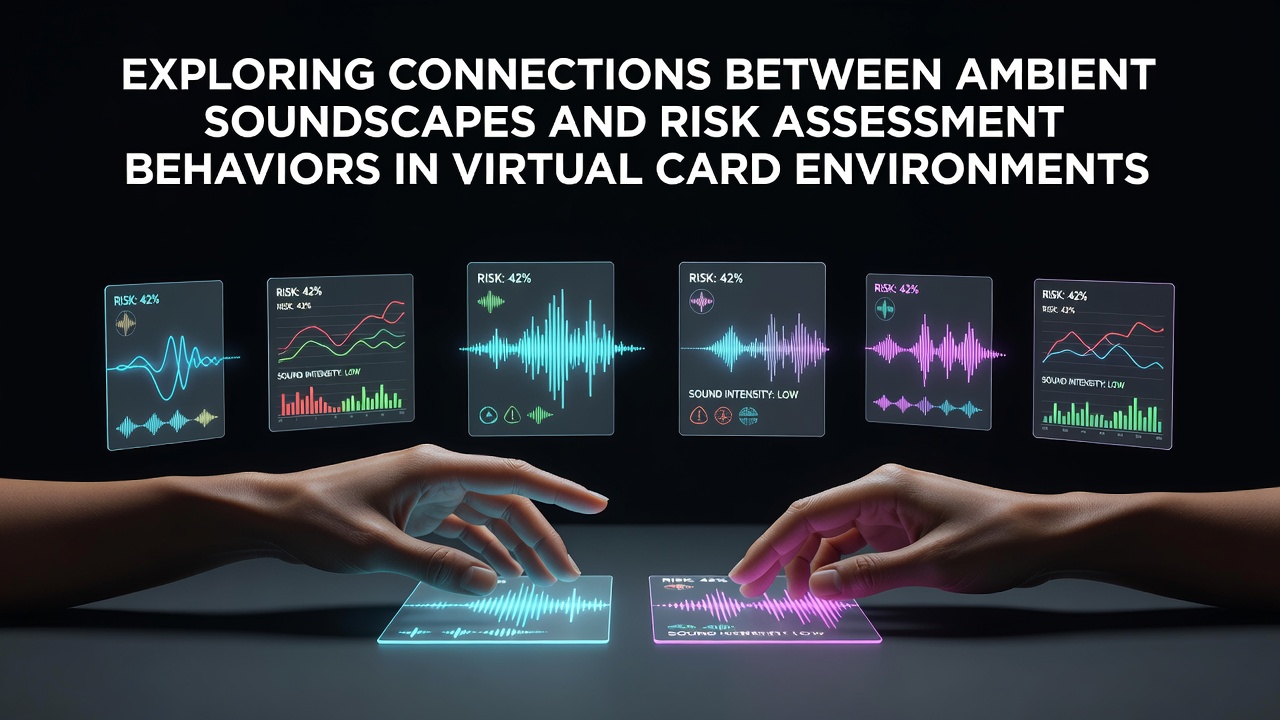
Exploring Connections Between Ambient Soundscapes and Risk Assessment Behaviors in Virtual Card Environments
Virtual card environments have expanded rapidly in recent years, and researchers have begun mapping how ambient soundscapes interact with player choices during games such as poker, blackjack and baccarat. Data collected across multiple platforms in 2025 and early 2026 shows measurable shifts in betting patterns when background audio changes in volume, tempo or texture. Observers note that these shifts appear consistently in controlled trials, even when visual elements remain identical.
Sound Design Elements in Digital Card Platforms
Developers layer multiple audio tracks that include subtle crowd murmurs, chip clinks, low-frequency drones and occasional musical swells. These components run continuously yet adjust dynamically based on game phase or player action. Studies conducted at several North American universities have tracked eye movement and click timing while varying only the audio feed, revealing that certain frequency ranges correlate with longer pauses before a bet is placed. The same trials found shorter decision windows when high-frequency elements dominated the mix.
Patterns Observed in Risk Evaluation
Participants exposed to steady ambient loops placed bets within narrower ranges during early rounds, whereas those hearing variable sound intensity spread their wagers across wider intervals. Figures released in August 2026 by an industry analytics group covering European and Asian markets indicated a 12 percent increase in average stake size when low-frequency drones were added to otherwise neutral tracks. Conversely, abrupt silences inserted at random intervals prompted more conservative folds in multi-player formats.

Researchers tracking session logs across thousands of accounts have identified clusters where sound-triggered hesitation aligned with reduced all-in frequency. One dataset compiled by the Canadian Institute for Gaming Research linked specific decibel thresholds to a measurable drop in aggressive play, while another set of recordings from Australian servers showed the opposite effect when rhythmic pulses matched common betting tempos. These regional differences suggest platform operators calibrate audio profiles according to audience location and time of day.
Methodologies Used in Recent Investigations
Experiments typically isolate audio variables through A/B testing within live beta environments. Players receive identical card distributions and interface layouts, yet the soundscape changes between sessions. Heart-rate monitors and cursor-path analytics supplement self-reported comfort levels. Results compiled through mid-2026 indicate that tempo acceleration during river decisions coincides with quicker calls, while sustained minor-key tones correlate with increased check frequency. Cross-referencing these logs with demographic filters reveals stronger responses among users aged 25 to 34 who maintain longer average session durations.
Academic teams have also examined how pre-existing player profiles interact with sound cues. Accounts flagged for high-volatility histories demonstrated amplified reactions to sudden audio drops, shifting toward safer selections at rates exceeding those of lower-volatility counterparts. Such findings appear in working papers from institutions in both the United States and Singapore, confirming the pattern across distinct regulatory environments.
Platform Adjustments and Data Feedback Loops
Operators now integrate real-time audio modulation tools that respond to aggregate risk metrics gathered during live play. When collective betting velocity exceeds preset thresholds, systems may introduce softer ambient layers or extend transition intervals between hands. Reports from the Australasian Gaming Council document several implementations that reduced dispute rates tied to rapid decisions after these adjustments were deployed. The same reports note that player retention metrics remained stable, suggesting the modifications did not deter engagement.
Integration with loyalty tracking systems allows further refinement. Sound preferences stored per account can trigger personalized mixes during subsequent visits, and early internal reviews indicate modest improvements in session completion rates when users encounter familiar audio textures. These adaptations rely on anonymized datasets shared among partner studios under standardized privacy protocols.
Conclusion
Evidence gathered through controlled trials and platform analytics continues to illustrate links between ambient soundscapes and the pace or scale of risk-related choices in virtual card settings. Regional studies completed by mid-2026 provide consistent indicators that audio layering influences decision timing and wager distribution, although the magnitude varies by user cohort and market. Ongoing data collection from multiple continents will likely refine these observations as operators test additional variables in live environments.